When I first started playing pickleball, I was happy just to get the ball over the net. Now, after years of practice, I’m starting to really see the court, reading patterns, predicting moves, and making smarter decisions.
One of my biggest realizations was that I had more time than I thought to make my next shot. Once I stopped rushing, I started using my peripheral vision to see more of the court and recognize what was happening around me.
Seeing the court isn’t just about vision. It’s about recognizing patterns, anticipating what may happen next, and knowing what to do with the information you’re seeing. Here are some of the things I see differently now.
Spotting Opponent Mistakes
- If my opponents don’t advance to the kitchen after their return, or if they hit a short serve return, I see this now and drive the third shot at them and move forward to the net.
- I always check for right or left-handed opponents. I see when there are 2 backhands in the middle and that’s my target for serve returns, third shot drops, or drives. It’s almost always their weak spot.
- If there is a right and left-handed opponent, I always see this before the point starts and, if possible, hit third shot drops to the back hand side of my opponents.
Eliminating Simple Mistakes
- Early on, I tried to hit winner serves and returns. Sometimes they worked, but many times they missed. Now I focus on depth and placement, challenging my opponents but not trying to win the point outright.
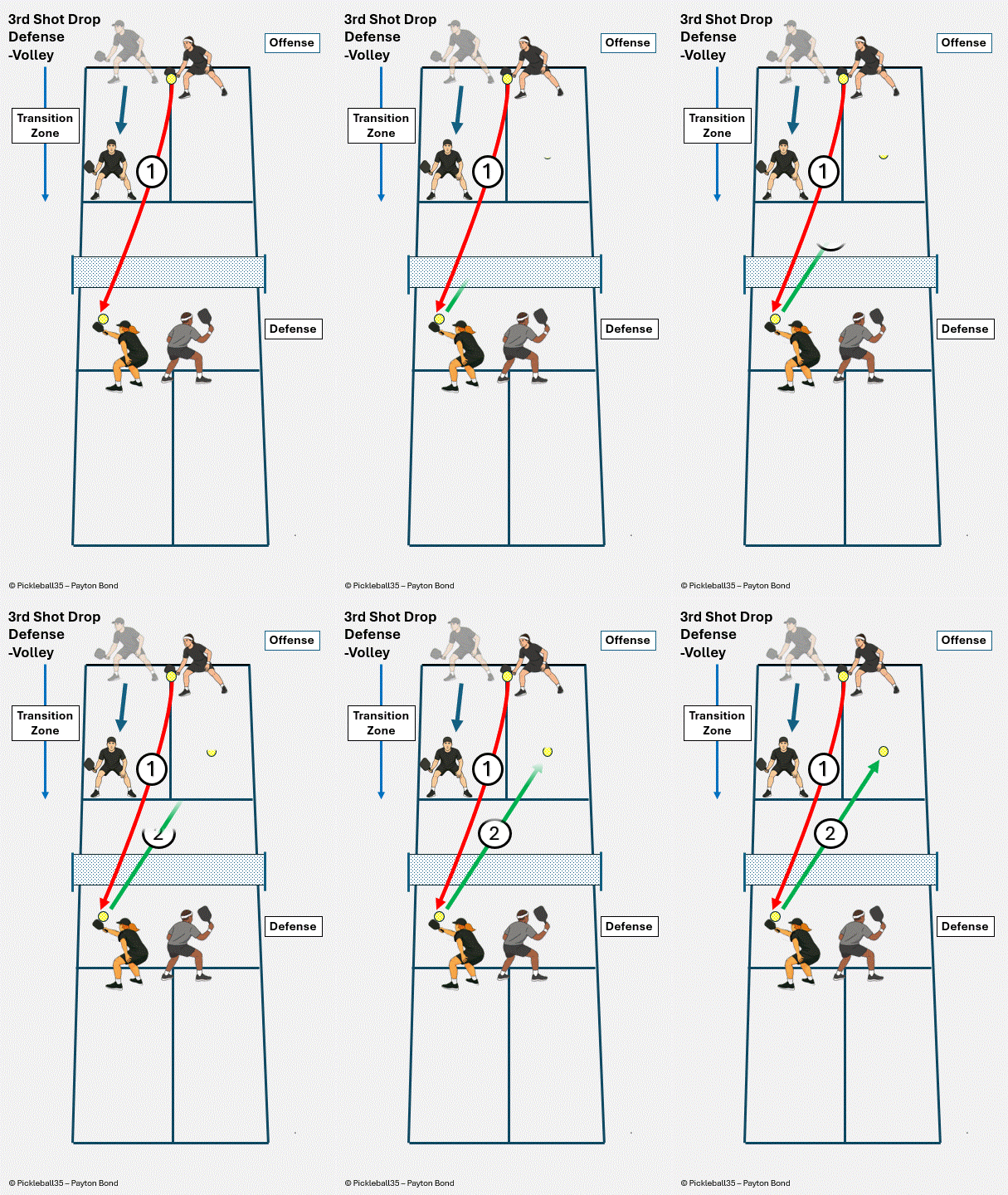
- In post-game reflection, I realized I was backing up when drop shots were hit at me. I could see this played right into my opponent’s hands. I’ve since trained myself to hold my position and volley those shots back at their feet instead.
Anticipating Shots
- When I hit a great third shot drop, when I see it dropping into the kitchen or I see my opponent backing up, I move in aggressively.
- On a poor drop shot, I see this now and I don’t rush in, instead I hang back and prepare to defend, often trying another drop shot to recover my position.
- When I see my partner hitting a third shot drive, I watch carefully and if I see it is low and diving over the net, I move in looking for a popup response.
- When I return serves or other shots into my partner’s side in the corner, I instinctively pinch toward the middle, cutting off angles while letting my partner cover the line.
Poaching and Disrupting
- If I see my opponent gearing up to drive a third shot at my partner, I step in and poach to take control.
- On the flip side, when I’m getting ready to drive the third shot towards the serve returner, I can see if my opponent at the net is sneaking in to poach. If I spot it, I change my shot at the last second, hitting behind or at them to disrupt their play.
Partner Communication
- I always focus on helping my partner make smart decisions, calling “No!” or “Watch it!” on close balls near the sideline or baseline.
- If my forehand is in the middle for the third shot, I take the lead and always call out "I've got it" or "You go" so there is no question who is taking the shot.
Kitchen Vision
- In Dinking exchanges, being patient and knowing I have more time, I see openings. If opponents aren’t staying tethered, I notice it and speed up the ball into the open space.
- In fast volleys, if an opponent shot slows down enough, I spot gaps as opponents shift and place the ball in openings they can’t play easily.
Reading the Game
- I’ve fully embraced the golden rule: “Shoulder high, let it fly.” I see this better now and it’s saved me countless times from swinging at balls that were clearly destined for the next zip code.
- I watch my opponent’s body language, paddle angle, and positioning to anticipate their next move. This awareness helps me react faster and get into the best position to counter their shot.
For me, seeing the court is about more than just vision. It’s about slowing the game down mentally, recognizing patterns, anticipating what is likely to happen next, and taking advantage of the opportunities the court gives you.