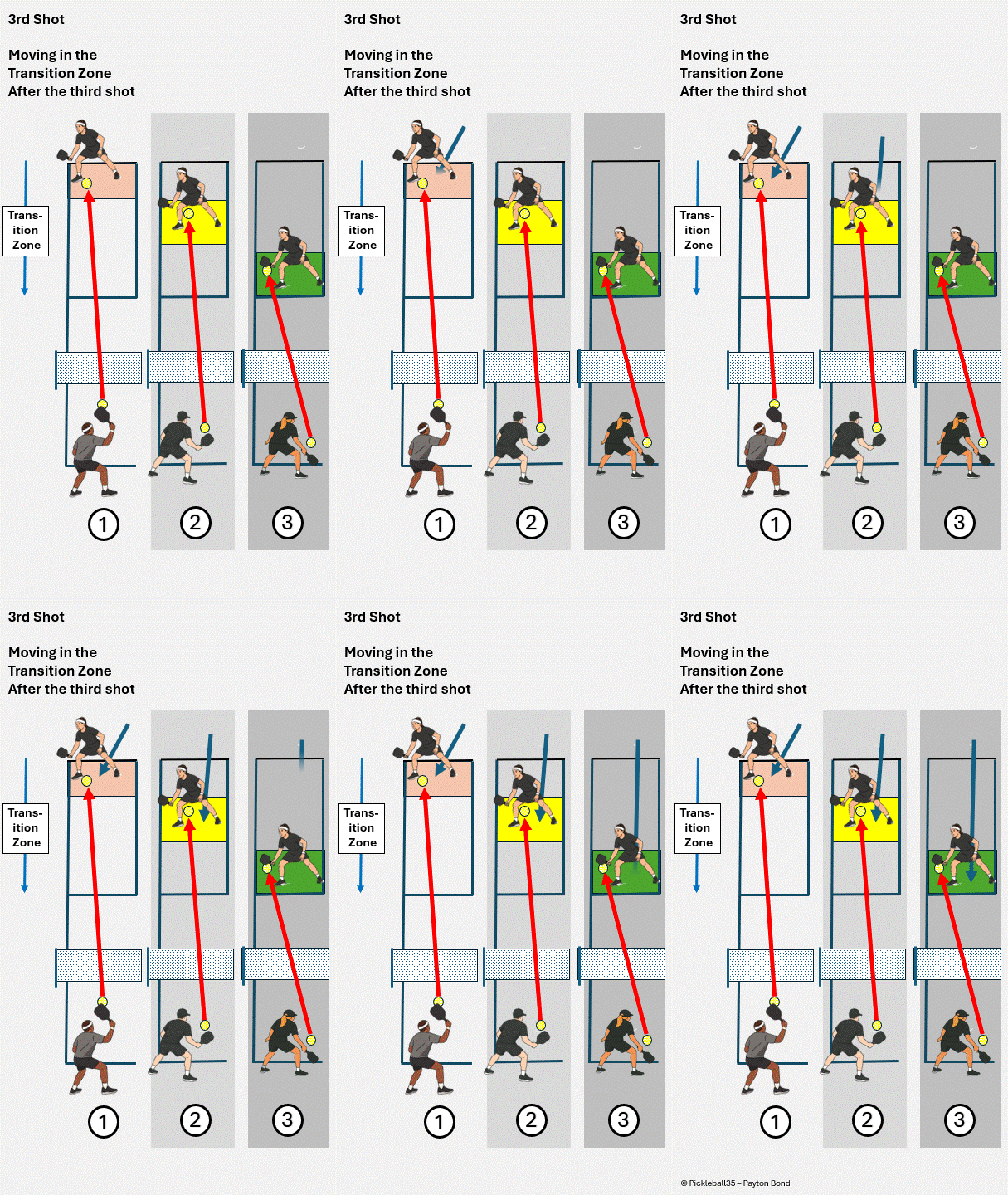
Your third shot in pickleball starts your transition forward to the kitchen (NVZ). The drop shot is a great option for your third as it can disarm your opponents and give you time to advance safely if played well. Of course, not all drop shots are perfect. Here are some outcomes of your drop shot and how you should react after hitting the shot.
After you hit your third shot, watch the quality of your drop and decide how aggressively you should move forward. Your objective is to hit a drop shot that just clears the net and lands low, forcing your opponent to swing upward. This makes it difficult for them to attack the ball and gives you the opportunity to advance safely through the transition zone toward the kitchen line.
Below are three outcomes of your drop shot, and each one tells you something different about how far you can safely move.
The Three Drops
1. The Floater (bad drop, high and deep)
Your drop shot sails a bit high and deep and likely will not land in the kitchen. You'll know it's a floater because your opponent doesn't hesitate. They raise their paddle to shoulder height or higher the moment they see it coming their way, already loading up to attack.
When you see this happening, take one or two small steps forward at most. Then split-step (pause, get balanced, and prepare to respond) and get low with your paddle ready to defend, because a smash is likely coming your way. If you can get a paddle on it, try to reset with another drop shot; otherwise just get the ball back any way you can and continue moving forward from there.
2. The In-Between Drop (okay height, a little deep or bounces a little high)
The height is fine, but the shot lands a little deep or bounces a little higher than you wanted. You'll know it's this one because your opponent doesn't load up to attack. Instead they set up to meet the ball around waist height. It's harder for them to put away, so they'll likely hit a neutral block or attempt a drive depending on where the ball is located and whether they let it bounce or volley it.
Take a few steps forward and split-step just as the ball crosses the net. Be ready to defend and reset with another drop shot if needed.
3. The Low Drop (good drop, clears the net low and drops fast)
You can see the ball dropping just over the net rather than carrying deep into the kitchen. You'll know it's this one because your opponent has to reach down and hit upward, or play a soft dink. They have no other option.
Start moving immediately. As soon as you recognize your opponent must hit up or dink, continue all the way to the kitchen line. Now you're looking for a mistake. If they leave the ball high, be ready to attack and finish the point.
Key Learning
All drop shots are not created equal, and you advance based on the quality of the shot you observe. Don't rush in on a bad shot and don't stay all the way back if the shot is okay. As you improve, you can also start targeting your shots more, aiming to get backhand responses, which will almost always be a weaker response.
And, of course, don't give up on the drop shot if you hit some bad ones. It takes time to develop the muscle memory for this shot, so drill it often and practice advancing against your drilling partner.
Do you watch the quality of your drop before deciding how far to move in? And are you using a split-step as you advance?